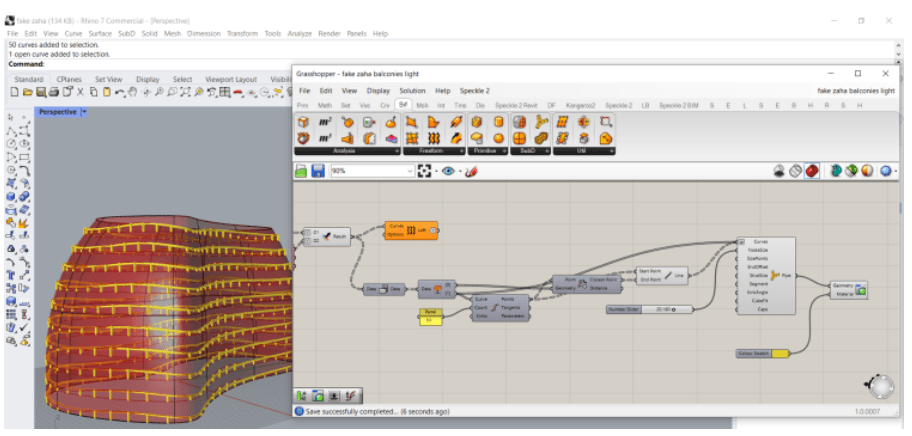
I have been using Visual Programming Tools in Architecture for over 10 years. They have been a tremendous help to me in my career and I wish to collect here some of my opinions on how I think they can best be used in the Architectural Design industry. Firstly I think it is useful to see what was there before the development of these tools. Computational design has been a part of Architectural Design longer than Visual Programming (VP) tools’ input. So before VP there was Text based scripting using languages such as MelScript for Maya3D and RhinoScript for Rhino3D. Below is an image of MelScript, but there are many other text based scripting languages being used in the Architectual Design (AD) Industry.
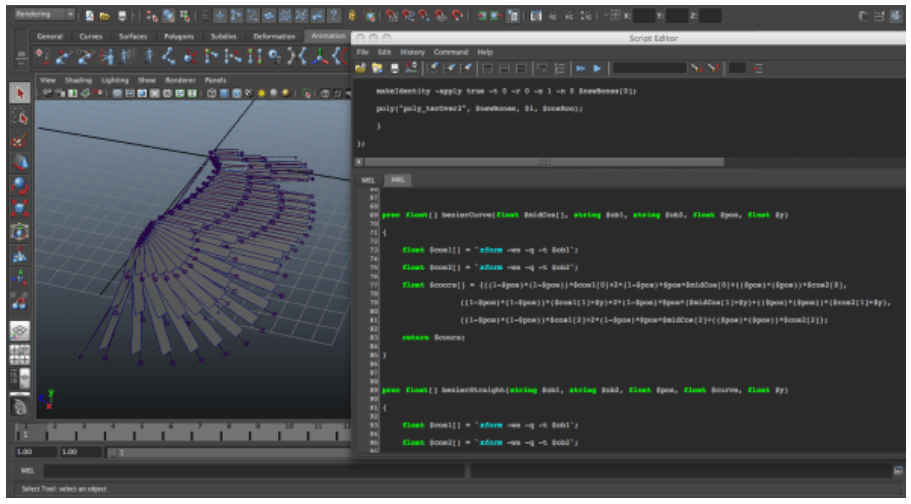
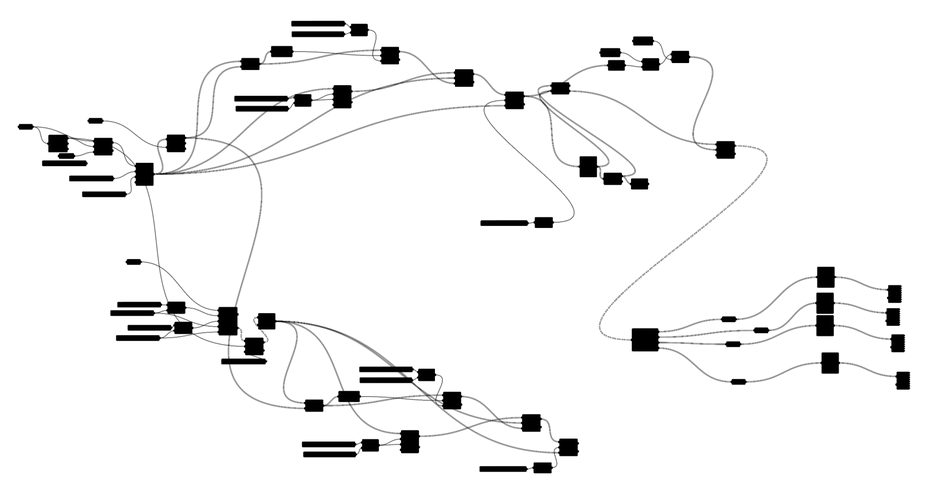
In my opinion Text based scripting which was more common 15+ years ago is much harder to do than VP. This meant only a few Architectural Designers were doing scripting to create designs. Then around 15 years ago scripting started to look like this image below. This image shows the User Interface of Generative Components. GC was an early attempt at bridging the gap between Architectural Design and the power of computation to assist. It is no longer widely used but it is considered an important tool in the development VP software. It also has fans that consider it the most precise and technical way of doing parametric modelling. Visual Programming is creating a computer script by arranging a flow diagram of boxes and wires connecting them. It is a lot easier for visual thinkers than writing Text based code.

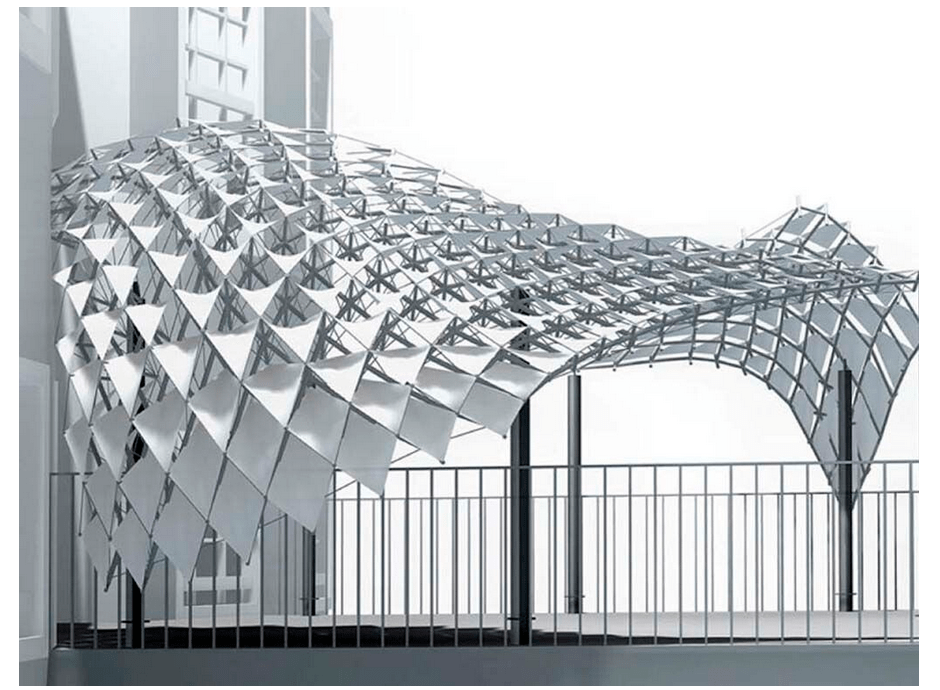
So why is scripting important to Architectural Design? We live in the computer age and scripting gives Architectural Designers access to the power of computation to assist in designing better buildings. Scripting allows designers to communicate with computers in a language they understand. Finally scripting is the only way to create some the complex shapes and patterns demanded by contempoary AD styles. The manual method of interacting with the design software is no longer capable or efficient enough to compete at the cutting edge of AD. The image below is over a decade old and I believe this design was created using Generative Components at the Architectural Association in London. You can clearly see complexity in this design is to much too difficult to match using manual GUI based methods.
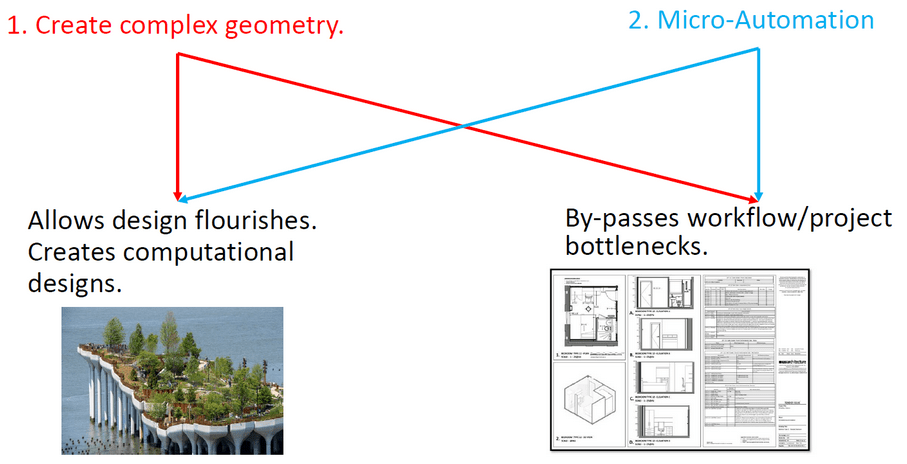
So what are VP’s abilities? What can it do to help? In my opinion VP’s two key abilities are 1.Creating compex geometry easily and 2.Micro-Automation. How this can help Architectural Designers is to allow them to more easily create design flourishes or computaional shapes/patterns and overcome project or workflow bottle-necks. Please see the image below that shows how each abilities can assist in each different way. The sub-image on the left shows a design generated using a computationally generated pattern which the designer had access to because of VP. The sub-image on the right shows some BIM schedules created using VP micro-automation workflow.
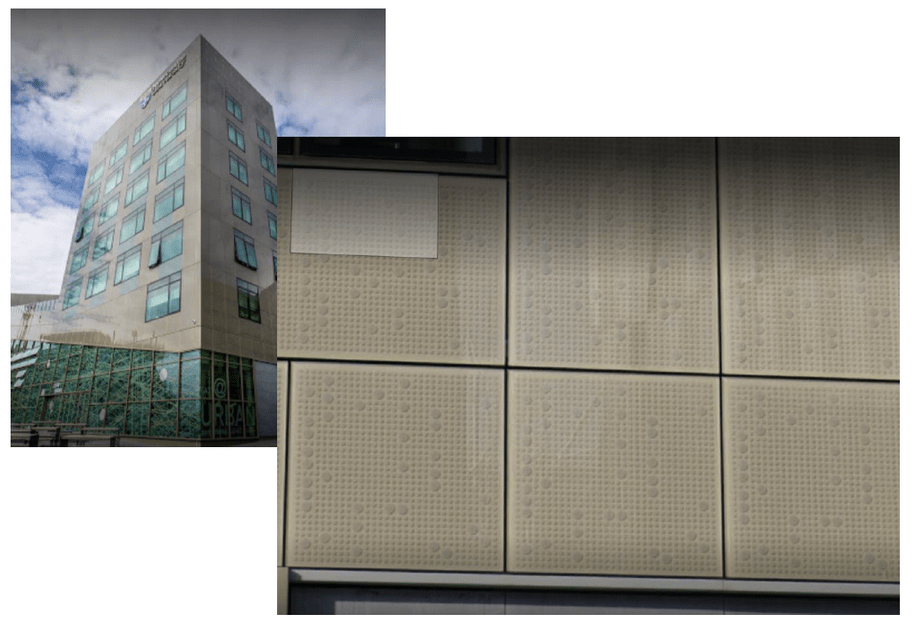
As an example of how VP can be used succesfully on a contempoary Architectural Design project. I would like to dicuss the below building designed by Hawkins Brown (hawkinsbrown.com). It is the Urban Sciences Buidling at the University of Newcastle. A member of the design team had the ‘poetic’ idea of recording the history of Newcastle in Binary on the facade panels of the building. This was to help ‘root’ the building in it’s location. VP was used to convert the history text file into a binary string, then this binary string was panelised onto the facade panels of the building. VP is only a part of the process and not the whole story. In this project apart from a few design flourishes the majority of the design model was created without VP. On different projects VP is used in different amounts, sometimes doing lots, other times doing less. Thomas Heatherwick’s Vessel project in NY is an example of a project where VP created the majority of the model.
So finally here are some thoughts about how VP can be introduced in a Architectural Design company.
- Implementation is probably more successful using top down approach from company management. Bottom up less likely to succeed. I mean the insistance that these tools be adopted needs to be a management decision.
- Nominate specialists and champions in each team/office to provide this added functionality. Limits amount of redundant training happening.
- Try adding design flourishes using Visual Programming.
- Make use of micro-automation to remove workflow or project bottlenecks.
- Encourage use of Grasshopper and Rhino for design prototyping.
- Can’t teach everyone these tools. Many people have other interests, and these tools still take time to learn. Communicate the ‘by way of specialists’ roll out strategy to staff to avoid unnecessary anxiety.
(Please contact me for image attribution or clarifications/improvements)
 SJM Studio Leeds